Per- and poly-fluoroalkyl substances (PFAS) pose significant challenges to water and wastewater utilities due to their persistence and potential health risks. These substances are a family of more than 9,000 synthetic compounds that prevent things from sticking to each other, like non-stick coatings on cookware to pizza boxes. PFAS takes centuries to break down, making them “forever chemicals” and “everywhere chemicals.”
PFAS regulations are changing because some adverse health effects may occur at concentrations near zero, and lowering the levels in drinking water decreases the risk to public health. Some water systems have more than 2,000 times the maximum allowed amount.
PFAS has become a significant cause for concern due to its potential health effects on humans. Studies have linked these highly persistent and bioaccumulative chemicals to adverse effects on liver function, kidney function, immune system response, and endocrine disruption. Additionally, certain PFAS compounds have been associated with an increased risk of certain cancers, such as kidney and testicular cancer. The potential for developmental and reproductive effects, including reduced fetal growth, premature birth, and altered hormone levels, is also a significant concern. Given the potential health risks associated with PFAS exposure, addressing these contaminants in water and wastewater systems is essential to minimize public health impacts and liability.
Initial PFAS regulations limit Perfluorooctanoic acid (PFOA), Perfluorooctane sulfonate (PFOS), GenX Chemicals (HFPO-DA), and Perfluorobutane sulfonic acid (PFBS), and these values are shown in parts per trillion (ppt). EPA’s current enforceable drinking water standards were finalized on April 10, 2024 under the PFAS National Primary Drinking Water Regulation (NPDWR), setting Maximum Contaminant Levels (MCLs) of 4 ppt for PFOA and 4 ppt for PFOS, plus 10 ppt for GenX chemicals (HFPO-DA); the rule also established a Hazard Index (unitless) to address mixtures of PFHxS, PFNA, HFPO-DA (GenX), and PFBS (rather than a standalone MCL for PFBS). Utilities have a compliance period that runs through 2029 to meet these standards, and in May 2025 EPA announced its intent to reconsider/rescind the standards for PFHxS, PFNA, and GenX and to extend the compliance period from 2029 to 2031 (rulemaking in progress).
Chemical | Health Advisory Value (ppt) | Minimum Reporting Level (ppt) |
PFOA | 4 ppt (MCL) | 4 |
PFOS | 4 ppt (MCL) | 5 |
GenX Chemicals | 10 ppt (MCL) | 5 |
PFBS | Hazard Index (unitless) – mixture standard (PFHxS, PFNA, GenX,PFBS) | 3 |
We utilize state-of-the-art technology and analytical techniques to detect and monitor PFAS levels in water and wastewater. Our comprehensive approach allows for accurate assessments, providing crucial data to develop targeted mitigation strategies.
Our team assists utilities in developing robust compliance management plans to meet the regulatory requirements of PFAS monitoring and reporting. We provide guidance on sampling protocols, data interpretation, and reporting procedures to help utilities maintain compliance and meet regulatory deadlines.
InSite Engineering works closely with utilities to design and implement advanced treatment systems to effectively remove PFAS contaminants. We tailor solutions to match each client’s specific needs, ensuring efficient and cost-effective removal of PFAS compounds. Based on EPA-identified treatment technology options for PFAS reduction in drinking water, we utilize Granular Activated Carbon (GAC), Ion Exchange (IX), Reverse Osmosis (RO), and Nanofiltration (NF) technologies to address PFAS contamination in water and wastewater utilities.
PFAS treatment requires technologies designed to remove dissolved, extremely small compounds—often at very low concentrations. EPA identifies several proven approaches that utilities commonly evaluate and pilot based on their source water quality, target PFAS compounds, and waste handling requirements.
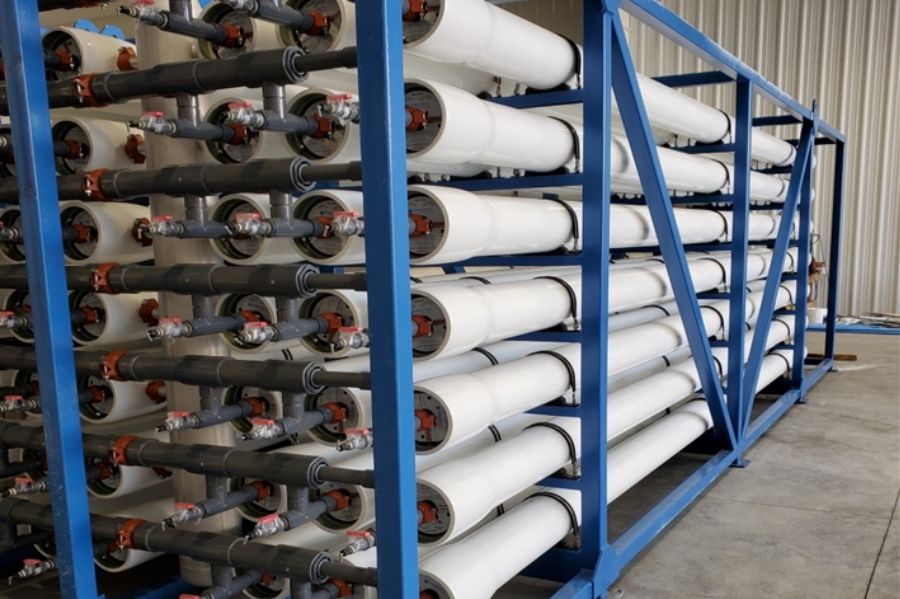
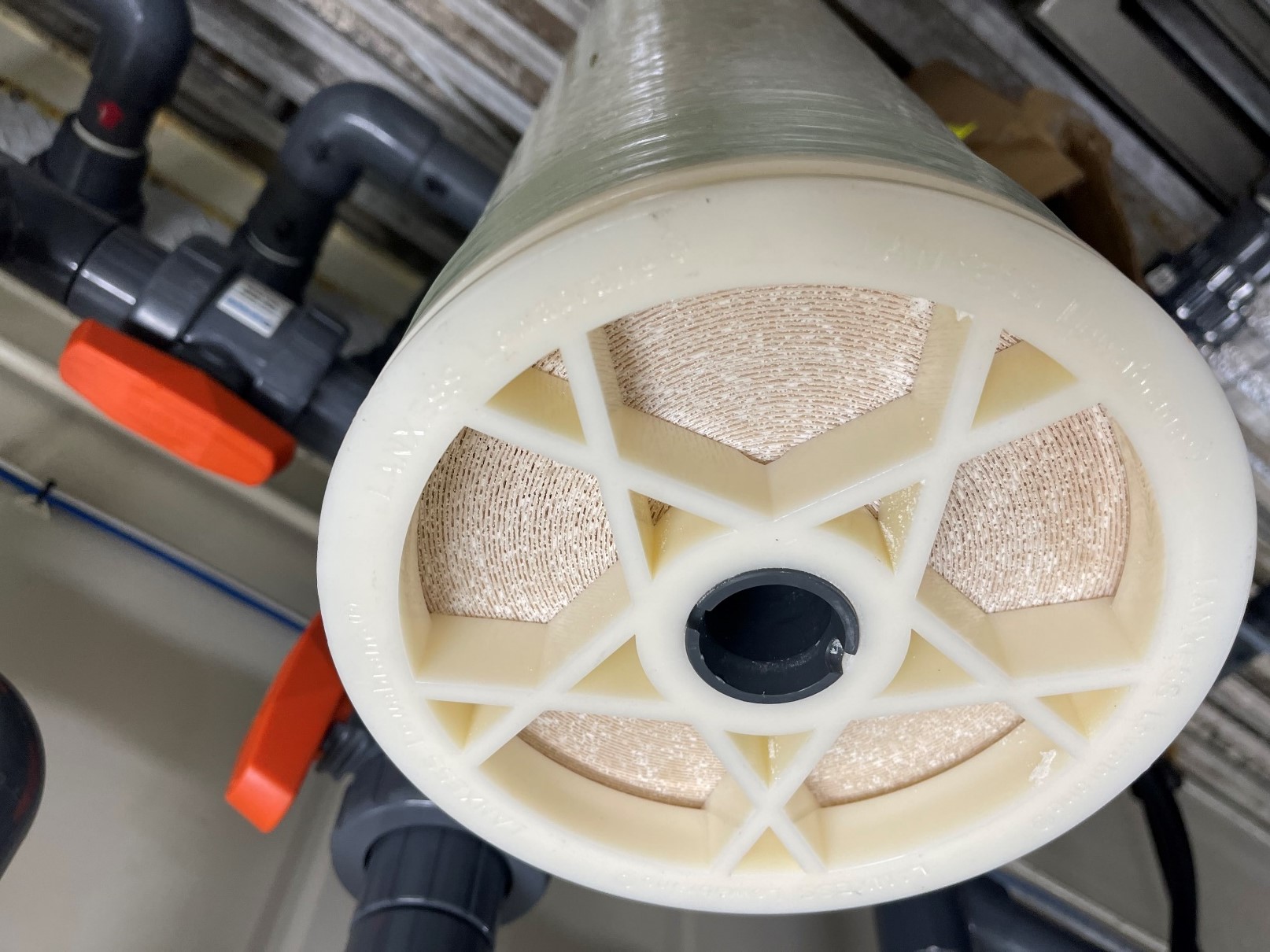
Nanofiltration (NF) is a tighter membrane process than microfiltration, with much smaller effective pore sizes—making it significantly more effective for PFAS removal. NF can achieve high rejection of many PFAS compounds while typically allowing more mineral passage than RO, which can be beneficial depending on finished-water goals. Like RO, NF generates a concentrated waste stream that must be properly handled.
Ion Exchange (IX) uses engineered resins to attract and hold negatively charged PFAS compounds as water flows through the vessel. IX systems can be highly effective for a wide range of PFAS, including shorter-chain compounds that can break through GAC more quickly. Depending on the resin type and operational strategy, spent resin may be regenerated or disposed of in accordance with applicable regulations.
Reverse Osmosis (RO) is a highly effective membrane process that uses pressure to separate ions, molecules, and contaminants from water. RO membranes have a much smaller pore size, typically around 0.0001 micrometers, which enables the removal of smaller PFAS compounds and other contaminants. The addition of RO in the treatment process after MF allows for the comprehensive removal of PFAS from the water or wastewater stream, while optimizing the performance of the RO system.
Granulated Activated Carbon (GAC) filtration is a widely used method for removing organic contaminants, including PFAS compounds, from water. GAC has a high surface area and adsorption capacity, allowing it to effectively capture and remove a wide range of contaminants. GAC is commonly used as either a standalone treatment method or in conjunction with membrane processes like MF and RO. By adding a GAC filtration stage, utilities can target PFAS compounds that cannot be effectively removed by membranes alone, further enhancing the overall treatment process.
By integrating MF, RO, and GAC technologies into the engineering solution, InSite Engineering ensures a multi-barrier approach to PFAS removal, providing utilities with robust treatment capabilities. Our team of experts will design and optimize the treatment system that accounts for feedwater quality, PFAS concentrations, and system capacity to deliver a tailored and effective solution for each utility’s specific requirements.
Contact us today to learn more about how InSite Engineering can support your utility in implementing effective PFAS compliance solutions. Trust us to be your partner in safeguarding the quality of your water supply in the face of impending PFAS regulations from the EPA.